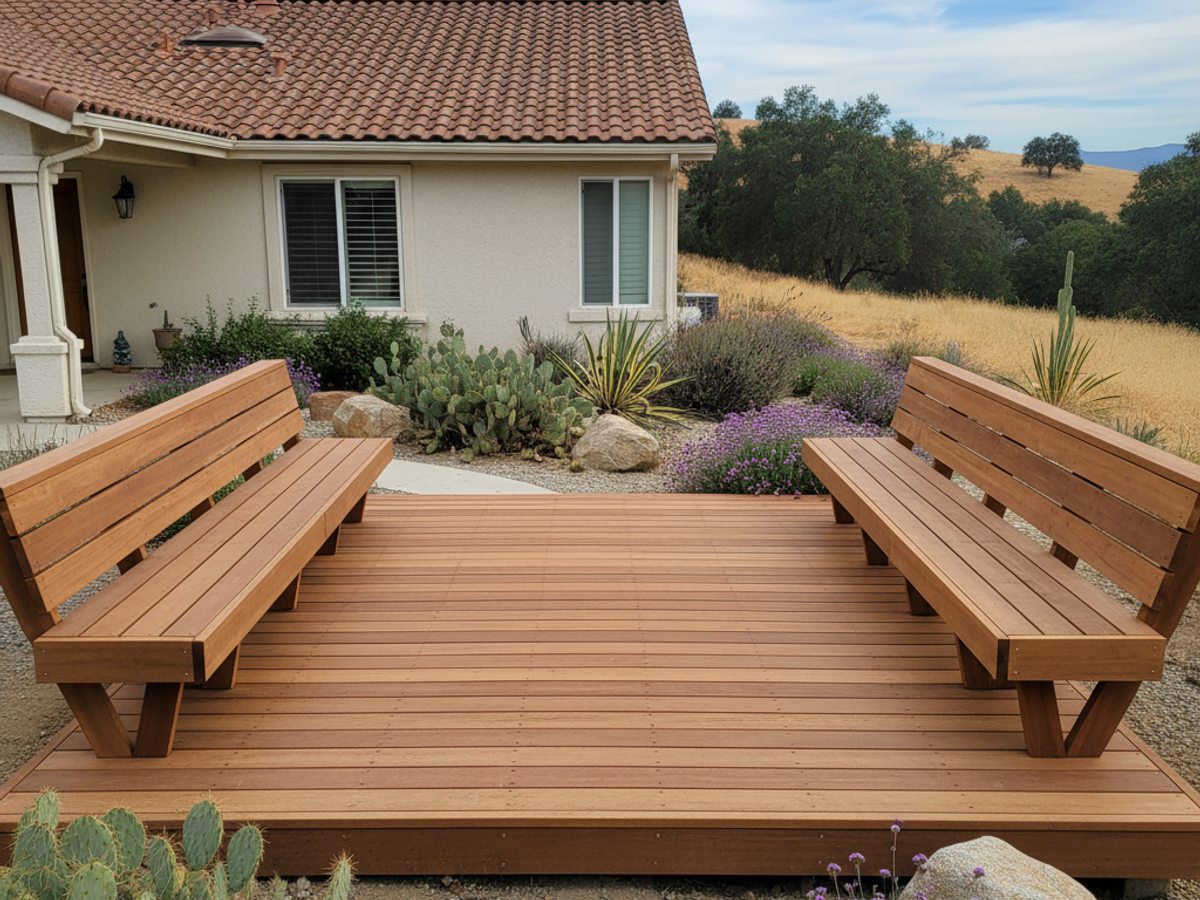
Most people ask about deck timing because they want a target month. The real answer is about what the ground and the air are doing to the materials, not what looks nice on a calendar. Concrete needs certain temperatures to cure right. Wood needs to be dry when you seal it. Composite boards expand and contract with heat swings more than people expect. Madera's climate hits all three of those in ways that are pretty specific to this valley.
What the clay soil does to footing work
A lot of the Madera flatland, and out toward the Ranchos, sits on adobe-heavy clay. That soil swells when it's wet and shrinks hard when it dries out in summer. If you pour deck footings shallow, or skip proper sonotube depth, you'll get movement over a couple of seasons, posts that lean, railings that go slightly out of square. Footings here usually need to go down 12 to 18 inches depending on the deck's load and how the soil tests, well past the zone where seasonal moisture swings mess with it. This isn't frost heave like you'd deal with in a mountain climate. Madera rarely gets a hard freeze. It's shrink-swell clay, and it moves on its own schedule regardless of what month you build in, which is exactly why the footings matter more than the weather does.
Summer heat causes its own problems
July and August in Madera regularly sit at 100 to 105 degrees. That's brutal for a work crew, but it also messes with the materials directly. Concrete cures fastest in the first 24 to 48 hours, and if it's curing in extreme heat it can lose surface moisture too quickly and start micro-cracking before it hits full strength, which normally takes 28 days either way. Stain and sealant are worse in this heat. Most exterior deck stains want to go on when the wood surface is between 50 and 90 degrees. Put stain on a deck board sitting at 130 degrees of surface heat in direct August sun and it flashes off before it soaks in, leaving lap marks and a blotchy finish that won't fix itself. Composite decking expands too. A 12-foot composite board can grow close to a quarter inch across a big summer to winter swing, which is why gapping at install matters and why installing in peak heat with the boards already fully expanded is asking for trouble come January.
Fall is the window most builders actually want
September through November in Madera is the sweet spot. Daytime highs drop into the 70s and 80s, nights cool off, and the rain hasn't really started yet. Wood is dry enough to seal properly, concrete cures at a sane rate without flash-set problems, and crews aren't working through a heat advisory. If you're building anything with real structural framing, ledger attachment, joist hangers, this is the stretch where the lumber behaves the most predictably before winter moisture shows up. It's also, not coincidentally, when a lot of local builders are busiest, so booking early in the season pays off.
Winter works, with some caveats
Madera winters aren't harsh, but they're not nothing either. December and January bring the valley's tule fog, mornings where everything outside stays damp until close to noon. That's a problem for staining and sealing specifically, less of one for framing and structural repair. Rain is light overall compared to a coastal climate, but it's concentrated November through March, so you're watching the forecast more closely for pour days and finish days. Cold mornings in the high 30s aren't rare either, and sealant doesn't want to go on below about 50 degrees, so winter staining jobs often get pushed to afternoon hours or delayed a few days waiting for a clear stretch. Structural work, deck framing repair, post replacement, footing work, can still happen through winter without much trouble. It's the finish work that's picky about weather.
Spring, and why it's not the obvious pick people think
Spring looks appealing on paper, mild temperatures, everything green. But this is also when Madera gets its heaviest rain and the ground is at its wettest, which is the worst time to be pouring footings into that clay soil. Wet clay doesn't compact the same way, and it can shift again as it dries out over the following weeks. If you're set on a spring build, later April into May is more workable than March, once the ground has had a chance to firm up.
Permits don't really care what season it is
If you're inside city limits, the City of Madera handles the permit and inspects footings, framing, and sometimes railing height depending on deck height above grade. Out in unincorporated areas like the Ranchos, it runs through Madera County instead. Either way, a deck attached to the house or standing more than 30 inches off the ground is usually going to need a permit and a couple of inspection visits, footing inspection before you pour, and a final once it's framed and railed. None of that changes by season. What changes is how fast an inspector can get out to your site during their busier months, which tends to track with the same fall rush everyone else is dealing with.
If you're trying to land a project this year, fall is where you'll get the best combination of dry wood, workable concrete, and manageable crew scheduling. If your deck needs structural repair now, that doesn't wait on a season, since a rotten ledger board or a failing post is a safety problem regardless of the month. Midway Deck Co works through most of the year in Madera and can tell you honestly if your project should wait a few weeks or go ahead now.