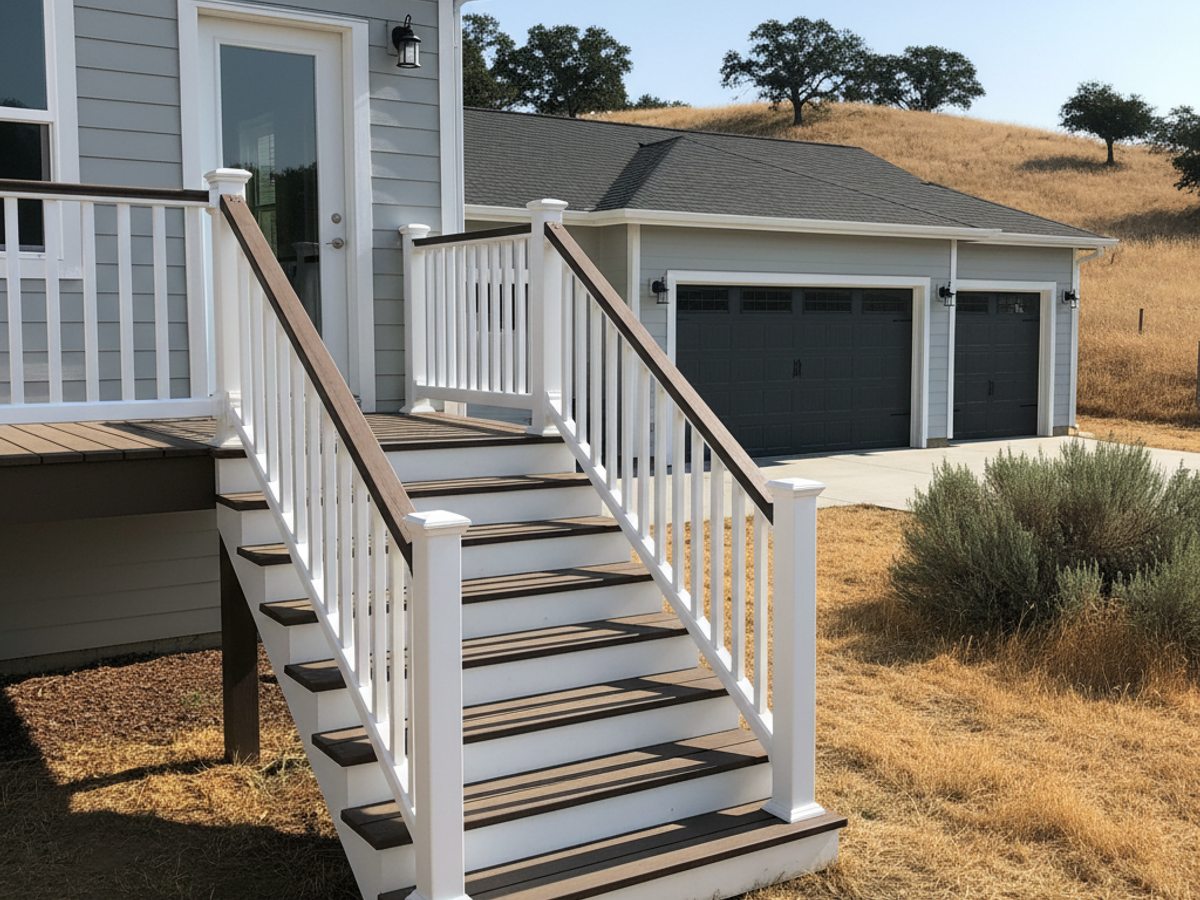
Every deck job in Madera starts the same way on paper and ends up different in the ground. The plans look fine until somebody digs a footing hole and hits caliche hardpan eighteen inches down, or finds out the old orchard the subdivision was built on left the clay expansive enough to crack a slab. Here's what actually matters before the first post hole goes in.
What's under the yard, not just what's on it
Madera County soil isn't one thing. Closer to the Fresno River and the older parts of town you'll find sandy loam that drains fast and compacts easy, which is good news for footings. Out toward the newer subdivisions built on old ag land, like some of the Gateway Village and River Ranch tracts, you can hit heavier clay that swells when it's wet and shrinks hard when it dries out in August. A footing poured on that clay without enough depth or a wider pad can heave a few tenths of an inch over a couple of seasons, and that's enough to make a ledger board pull away from the house. Before you dig, know which kind of ground you've got. A soil auger test costs nothing compared to redoing a footing.
If the house is on a well and septic system, which is common once you're outside city limits in unincorporated Madera County, check where the leach lines run before anyone plans post locations. Nobody wants to find that out with an auger mid-dig.
The ledger connection and what's behind your siding
Most deck failures don't start at the posts. They start where the deck bolts to the house. If your home has stucco, which a lot of Madera houses do, the ledger has to be flashed correctly behind that stucco or water gets behind it and rots the band joist over a few winters without anyone seeing it happen. Lag screws into a rim joist aren't enough anymore for most spans, code generally wants through-bolts with washers on a ledger carrying real load. If you're resurfacing or repairing an older deck, pull a board near the house and look at that ledger before you decide the rest of the deck is fine. Rot there is the single most common reason a twenty-year-old deck gets condemned instead of repaired.
Height, guardrails, and what triggers a permit
A deck under 30 inches above grade generally doesn't need a guardrail under the residential code, and in some cases doesn't need a building permit at all. Anything higher does, and that changes the whole project: footing depth, post size, baluster spacing capped at 4 inches so a kid's head can't fit through. Check your actual height above finished grade before you assume you're in the simple category, because a lot of Madera lots slope enough from front to back that a deck can read as 28 inches on one corner and 34 on the other.
Permits for deck work in the city go through the City of Madera Building Division; outside city limits it's Madera County Building. Either way, expect at least two inspections on anything structural: one for the footings before you pour, one for the framing before decking goes down. Plan the schedule around that. A crew that pours concrete and starts framing before the footing inspection happens is asking for a stop-work order.
Property lines, setbacks, and HOA rules
Older neighborhoods near downtown Madera and Parkwood mostly don't have HOAs, so setback rules come straight from the city or county zoning code, usually keeping structures a set distance from the rear and side property lines. Newer developments built since the early 2000s often do have an HOA, and those can have their own rules on top of the building code, sometimes restricting deck height, railing style, or even stain color. Check both before you design anything. Redoing a completed deck because it's four feet too close to the fence line is a bad conversation to have after the framing's up.
Materials, heat, and the two seasons that actually matter
Madera summers run 100 to 105 degrees for weeks at a stretch, usually July through early September. That heat matters for two reasons. First, composite decking expands and contracts more than people expect in that swing between a 105-degree afternoon and a 45-degree January morning, so gap spacing at install has to account for it or boards buckle by the second summer. Second, pressure-treated lumber that goes down too dry in August can split at the fasteners once it finally picks up moisture in the rainy months. Stain and sealer are the opposite problem: they need to cure without direct blazing sun baking the surface before it's had time to soak in, so late spring or fall mornings work better than a July afternoon.
Winter here isn't cold enough to worry about frost heave the way it would matter in Tahoe or Reno, but Madera does get tule fog and damp mornings from November through February, and that moisture sits in end grain and fastener holes if the wood wasn't sealed on the cut ends. That's a small thing that causes a lot of rot ten years down the line.
Drainage, because water always wins eventually
Check where your yard actually drains before the deck goes in, not after. A lot of Madera lots were graded flat enough for irrigation, not for shedding water away from the house, and a low deck can trap runoff against the foundation during a heavy December storm. If your gutters dump right where the new deck footings are going, move the downspout or the water. Standing water under a deck doesn't just rot joists, it invites termites, and the Central Valley has plenty of them.
None of this is meant to talk you out of the project. It's meant to save you from finding out about the ledger rot, the clay soil, or the HOA rule after the concrete's already poured. If you want someone to walk the lot and check these things before anything gets built, that's the first visit with Midway Deck Co, not an afterthought.