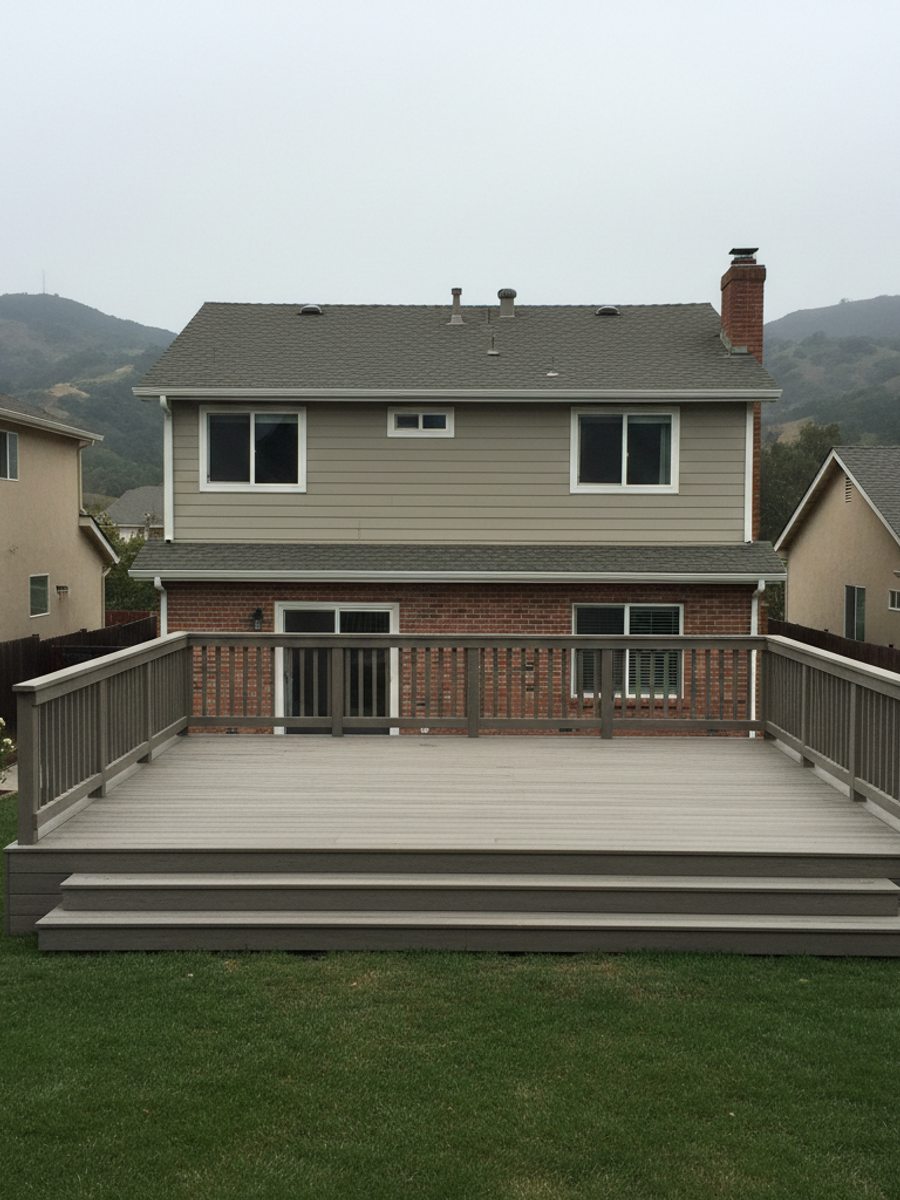
Ask three deck builders in Madera to price the same 12x16 deck and you'll probably get three numbers that don't look like they're for the same job. That's not always someone padding a bid. Decks have a handful of real cost drivers, and if a quote skips over them, that usually means the work gets skipped too.
Rough numbers first, because everyone wants them. A basic pressure-treated pine deck, ground level, simple rectangle, runs somewhere around $35 to $45 a square foot installed in this area once you count footings, framing, decking, and railing. Composite decking on the same footprint lands closer to $55 to $75 a square foot, mostly because the boards themselves cost two to three times what treated pine does. A raised deck, say six feet or more off the ground, adds cost fast because you're pouring more concrete, using taller posts, and often need stairs and a longer run of railing.
Framing is where the real money goes, not the boards
Most homeowners think they're paying for decking. They're mostly paying for what's underneath it. A deck that looks fine for two years and then starts bouncing, or worse, separating from the house, almost always has a framing problem, not a board problem.
Joist spacing matters more than people think. Wood decking is usually fine at 16 inches on center. A lot of composite boards need 12 inches on center or they'll sag between joists over time, especially in our summer heat when the boards soften slightly during the day. If a quote doesn't mention joist spacing at all, ask about it.
The ledger board, the piece bolted to your house that the whole deck hangs off of, is the single most common failure point in older decks. It has to be through-bolted or lag-bolted into the house framing, flashed properly so water doesn't run behind it and rot the sheathing, and lagged, not just nailed. Nailed ledgers are why you sometimes see a whole deck pull away from a house after a wet winter. This isn't a place to save money.
What the ground under the deck is doing
Madera sits on a mix of soils, and a fair amount of it has clay content that expands and contracts with moisture. That movement is exactly what footings are supposed to resist. Local code generally wants footings set at least 12 inches below undisturbed grade, but on clay-heavy lots we'll often go deeper or widen the footing pad so the deck doesn't heave or settle unevenly after the rainy season.
Concrete needs time before it can take load. You can usually frame lightly on a footing after about 48 hours, but we don't put full weight and framing pressure on it until it's had closer to a week to cure. A crew that pours footings on Monday and has your whole deck framed by Wednesday is moving faster than the concrete can safely support.
Why two quotes for the same deck can be far apart
- Footing count and depth. More footings, deeper footings, and larger footing pads cost more but hold up better on shifting soil. A quote with fewer footings than the framing plan calls for is cutting weight-bearing capacity, not corners.
- Hardware. Galvanized joist hangers and screws are the minimum. Stainless steel hardware costs more but doesn't streak or corrode against composite decking, and it matters a lot near sprinklers or anything that keeps the wood damp.
- Permit and inspection. A permitted deck gets inspected at the footing stage and again before the decking goes down. Skipping the permit saves a few hundred dollars up front and can cost you at resale, or if the deck ever needs an insurance claim.
- Decking material grade. Not all composite is the same. Capped composite resists staining and fading much better than uncapped, and costs more per board. Pressure-treated lumber grade also varies, and lower grade lumber has more knots and warp, which shows up within a year or two.
- Railing detail. Code requires guardrails on any deck over 30 inches high, with balusters spaced no more than 4 inches apart and a top rail that can take a 200-pound push. Custom railing in metal or cable costs more than standard wood balusters, but it's also a different look and a different lifespan.
Stain, seal, and the maintenance nobody prices in
A wood deck isn't done once it's built. Pressure-treated pine needs to dry out for a few weeks before it'll take stain properly, usually 4 to 6 weeks depending on the season, then it needs sealing again every 1 to 2 years to keep water out of the grain. Skip that and you're looking at graying, splintering, and eventually board replacement well before the framing underneath is actually worn out. Composite skips most of that maintenance, which is part of why it costs more up front.
What to actually compare when you're holding two quotes
Square footage price alone tells you almost nothing. Ask each bid what footing depth and spacing they're using, what grade of decking material, whether the ledger is through-bolted and flashed, and whether the permit and inspections are included in the number or added later. A quote that's a few thousand dollars higher because it specs deeper footings and better hardware is usually the cheaper deck over ten years, not the more expensive one.
If you want a number specific to your lot, soil, and the deck you're picturing, that's the part we walk through in person. You can see the rest of what we build, repair, and refinish through Midway Deck Co, and go from there.